← All EBooks Current working edition

The early child development guide

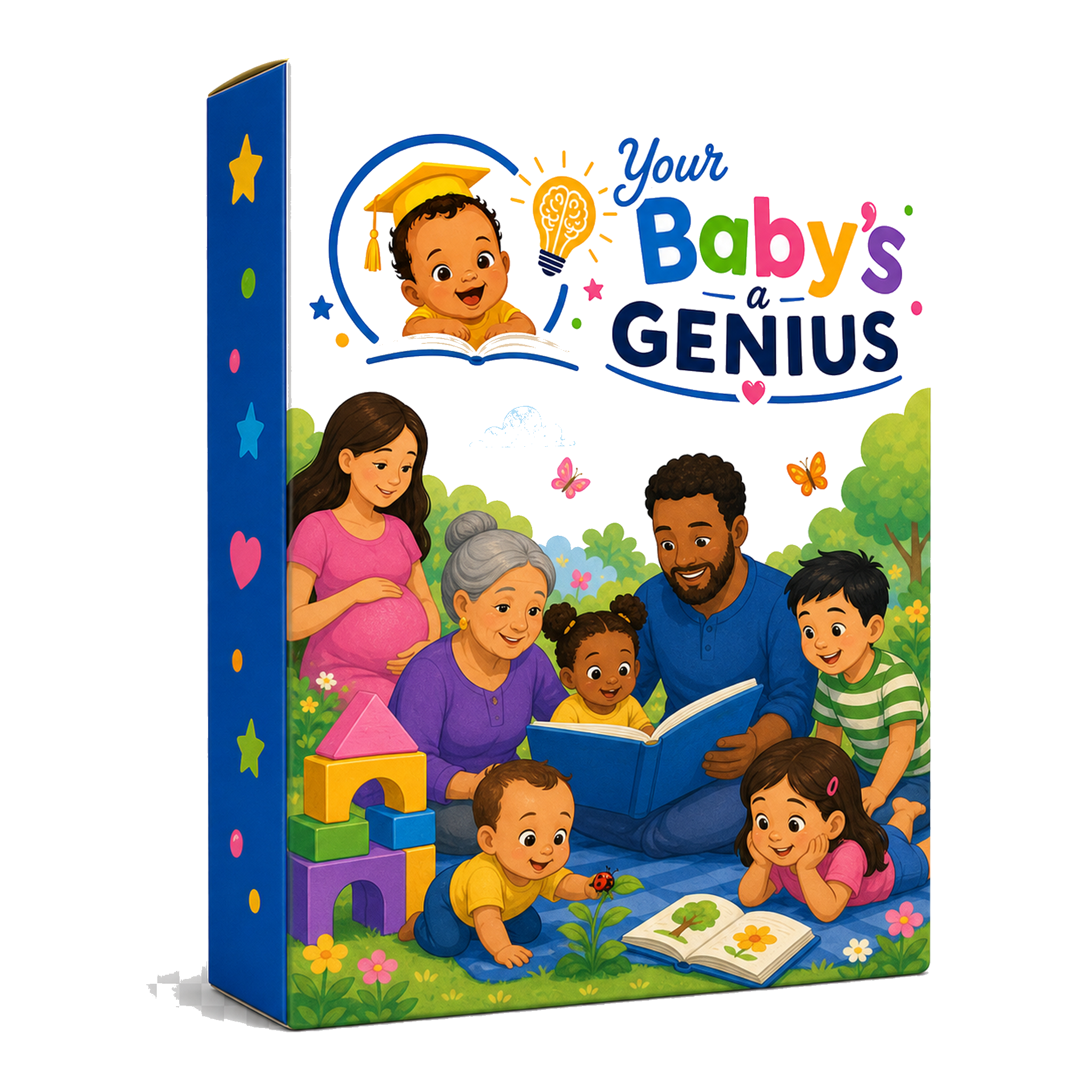
Your Baby's a Genius

A Gentle Guide to Noticing and Supporting Your Child's Natural Spark of Learning

Authored by Nigel Niiji Published by Indigetech Worldwide

A gentle, evidence-informed guide to noticing what a child is learning from before birth through the early school years, then offering one safe invitation, pausing for the child's response, and building forward without pressure, promises, or comparison.

$29.96 $39.96

25% off regular price

Access to the current working edition begins after verified payment. It may still be incomplete, and completed-edition updates are included. The planned completed-edition release is August 1, 2026. Planned completed-edition release: August 1, 2026 Price becomes $39.96 at release on August 1, 2026.
Opening the book
Your Baby's a Genius cover
Front cover01

The early child development guide

Your Baby's a Genius

A Gentle Guide to Noticing and Supporting Your Child's Natural Spark of Learning

Authored by Nigel Niiji Published by Indigetech Worldwide

Current working edition

Title page02

Inside this edition · 1 of 4

Table of contents

  1. 01
    Before Birth, the Earliest SparkPart I · Before Birth
  2. 02
    Nourishment, Safety, and the Care TeamPart I · Before Birth
  3. 03
    Voice, Rhythm, and SoundPart I · Before Birth
  4. 04
    Calm Is Support, Not a ScorePart I · Before Birth
  5. 05
    Watch, Answer, PausePart II · The Infant's First Learning Loops
  6. 06
    Talk Before WordsPart II · The Infant's First Learning Loops
  7. 07
    The Body Learns by MovingPart II · The Infant's First Learning Loops
  8. 08
    The World Through the SensesPart II · The Infant's First Learning Loops
  9. 09
    Sleep Is Care, Not a LessonPart II · The Infant's First Learning Loops
Contents03

Inside this edition · 2 of 4

Contents continued

  1. 10
    The First Learning LoopPart II · The Infant's First Learning Loops
  2. 11
    Name the World, Leave Room for an AnswerPart III · The Toddler Joins the Day
  3. 12
    Hands Join the DayPart III · The Toddler Joins the Day
  4. 13
    Math Is Hiding in the DayPart III · The Toddler Joins the Day
  5. 14
    Memory Grows Through ReturnPart III · The Toddler Joins the Day
  6. 15
    Feelings Have NamesPart III · The Toddler Joins the Day
  7. 16
    Toddler Routines That GuidePart III · The Toddler Joins the Day
  8. 17
    A Book Is a Place to MeetPart IV · Preschool Questions and Connections
  9. 18
    Tools Are Not Teachers by ThemselvesPart IV · Preschool Questions and Connections
Contents04

Inside this edition · 3 of 4

Contents continued

  1. 19
    A Question Can Become an InvestigationPart IV · Preschool Questions and Connections
  2. 20
    Make the Idea Two WaysPart IV · Preschool Questions and Connections
  3. 21
    Attention Can Leave and ReturnPart IV · Preschool Questions and Connections
  4. 22
    Pull the ThreadPart IV · Preschool Questions and Connections
  5. 23
    Read for a MissionPart V · The Independent Learner
  6. 24
    Math Can Wear More Than One ShapePart V · The Independent Learner
  7. 25
    Build Toward a GoalPart V · The Independent Learner
  8. 26
    Remember, Check, ExplainPart V · The Independent Learner
  9. 27
    Lead One Small PartPart V · The Independent Learner
Contents05

Inside this edition · 4 of 4

Contents continued

  1. 28
    Screens, Attention, and ChoicePart V · The Independent Learner
  2. 29
    The Real Learning HomePart VI · The Learning Home
  3. 30
    Rhythm That Fits Real LifePart VI · The Learning Home
  4. 31
    Materials Should Invite, Not PromisePart VI · The Learning Home
  5. 32
    Notice Patterns Without Grading the ChildPart VI · The Learning Home
  6. 33
    Bringing It All TogetherClosing · Bringing It All Together
Contents06

From one child-first moment to the next

Use what helps. Leave what does not.

A gentle, evidence-informed guide to noticing what a child is learning from before birth through the early school years, then offering one safe invitation, pausing for the child's response, and building forward without pressure, promises, or comparison.

Free preview includes front matter and Chapters 1 through 2.

Chapter 3 starts the full guide for readers with access.

  • Notice development.Begin with what your child is communicating, practicing, and ready to explore today.
  • Support, then pause.Offer one safe opportunity and leave room for your child's response.
  • Respect variation.Development follows connected but individual paths; questions deserve support, not comparison or blame.
How to use this book07

Before you begin

Warm Scope Note

A child learning through an ordinary shared moment.

This book offers general educational and parenting information.

It does not diagnose or treat medical, developmental, therapeutic, legal, or educational needs. It does not replace qualified professionals, school teams, pediatric care, therapy, evaluation, or individualized support.

Every child and family is different. Adapt activities for your child's age, safety, development, disability, communication, culture, language, interests, and family capacity.

If concerns persist, intensify, create safety risks, or interfere with daily life, seek qualified help.

Warm Scope Note08

Introduction · Part 1 of 14

Introduction: The Spark Is Not a Score

A warm child-first introduction to noticing the spark of learning.

The title of this book sounds big.

Your Baby's a Genius.

It may bring to mind a tiny professor in footed pajamas.

A baby solving equations before breakfast.

A toddler reading the grocery receipt while the rest of us are still looking for the grocery receipt.

That is not the promise of this book.

This book will not tell you that every child should read first, count fastest, remember the most, or win the room.

It will not give you an IQ formula.

It will not predict giftedness.

It will not turn a toy, flashcard, app, song, supplement, routine, or learning corner into a guarantee.

Introduction: The Spark Is Not a Score09

Introduction · Part 2 of 14

Introduction: The Spark Is Not a Score

It will not ask your child to become proof that you did everything right.

In this book, genius means something gentler.

It means the living spark inside learning.

The head that turns toward a voice.

The hand that reaches again.

The sound that becomes a back-and-forth game.

The toddler who sorts two socks, then puts one on a stuffed bear for reasons known only to the toddler.

The child who asks why.

The child who asks why again.

The child who forgets, checks, changes one thing, and tries another way.

The spark is not a score waiting to be announced.

Introduction: The Spark Is Not a Score10

Introduction · Part 3 of 14

Introduction: The Spark Is Not a Score

It is curiosity becoming action.

It is attention finding something worth returning to.

It is a child learning about the world, one small piece at a time.

What the Child Is Learning

This book keeps its attention on the child.

Not on how impressive the family looks.

Not on how quickly the parent can produce a result.

Not on whether the home resembles a classroom, a catalog, or a small private museum of wooden toys.

The child is learning to:

  • notice
  • listen
  • move
Introduction: The Spark Is Not a Score11

Introduction · Part 4 of 14

Introduction: The Spark Is Not a Score

  • communicate
  • compare
  • imagine
  • remember
  • ask
  • test
  • explain
  • relate
  • choose
  • repair
  • return

These abilities do not grow in a straight line.

A child may use a new word on Tuesday and appear to have mailed it to another country by Thursday.

A child may solve a problem with blocks but not with a drawing.

A child may talk freely at home and need quiet at school.

A child may love a book for six weeks, reject it for six months, then return as if the separation never happened.

Introduction: The Spark Is Not a Score12

Introduction · Part 5 of 14

Introduction: The Spark Is Not a Score

That is not failure.

That is development moving through a real child in a real life.

A Map, Not a Measuring Stick

The chapters move from pregnancy through the early elementary years.

That order is a map.

It is not a measuring stick.

Age ranges help organize ideas, but they do not set a deadline for every child.

Development is shaped by many things:

  • health
  • disability
  • communication
  • language
  • culture
Introduction: The Spark Is Not a Score13

Introduction · Part 6 of 14

Introduction: The Spark Is Not a Score

  • relationships
  • experience
  • access
  • interest
  • stress
  • sleep
  • safety
  • support

Use the stage that fits the child in front of you.

Return to an earlier idea when it helps.

Move forward when the child is ready.

Adapt the response, material, space, language, or amount of help.

If a concern persists or affects daily life, ask qualified professionals rather than asking an activity to answer a diagnostic question.

Invitation, Not Test

Introduction: The Spark Is Not a Score14

Introduction · Part 7 of 14

Introduction: The Spark Is Not a Score

The activities in this book are invitations.

An invitation says:

"Here is something we might notice together."

A test says:

"Show me what you can do."

Those are not the same experience.

An invitation leaves room for the child to:

  • look
  • listen
  • reach
  • move
  • speak
  • sign
  • point
  • draw
  • build
Introduction: The Spark Is Not a Score15

Introduction · Part 8 of 14

Introduction: The Spark Is Not a Score

  • use AAC
  • answer in a home language
  • ask for help
  • say no
  • stop
  • return later

The child does not fail by responding differently than an adult expected.

The adult's job is not to drag the child toward the planned answer.

The adult's job is to notice what the child is showing and choose the next safe, useful step.

Small Is a Serious Size

This book does not require a perfect program.

It does not require a perfect room.

It does not require every activity.

Introduction: The Spark Is Not a Score16

Introduction · Part 9 of 14

Introduction: The Spark Is Not a Score

It asks for one small invitation.

A song.

A book.

A safe object.

A question.

A walk.

A drawing.

A pattern.

A pause.

A return.

Small works because small can fit inside ordinary life.

Small can happen before the laundry is folded.

Small can survive the day the laundry is never folded.

Introduction: The Spark Is Not a Score17

Introduction · Part 10 of 14

Introduction: The Spark Is Not a Score

Small can stop when the child is tired.

Small can change when the first idea does not fit.

Small leaves room for curiosity.

How Each Chapter Moves

Most chapters follow a simple path.

First, we notice something adults often misunderstand.

Then we turn the idea and look from the child's side.

Next, we name one useful learning point in plain language.

Then we try one small action.

Finally, we return to the chapter's central echo.

The chapter should bring you somewhere useful without making you climb a mountain in the kitchen.

Introduction: The Spark Is Not a Score18

Introduction · Part 11 of 14

Introduction: The Spark Is Not a Score

Safety Comes Before the Lesson

No learning activity is more important than safety.

Safety includes:

  • medical and developmental needs
  • safe sleep
  • safe movement and positioning
  • age-appropriate materials
  • choking, battery, magnet, cord, water, heat, chemical, and furniture safety
  • emotional and physical boundaries
  • communication and disability access
  • digital privacy and online contact
  • knowing when home support is not enough

The book includes safety notes where they matter.

Read them before the activity.

Introduction: The Spark Is Not a Score19

Introduction · Part 12 of 14

Introduction: The Spark Is Not a Score

When a qualified professional gives guidance for your child, that guidance takes priority over a general suggestion in this book.

One Small Invitation

Choose one idea from the chapter you are reading.

Keep it small.

Invite Offer the activity without turning it into a test.

Notice Watch what the child looks toward, reaches for, says, signs, draws, builds, changes, repeats, avoids, or asks.

Respond Add one word, model one step, reduce the task, change the material, offer another response mode, pause, or stop.

Close End with one thing you noticed.

Introduction: The Spark Is Not a Score20

Introduction · Part 13 of 14

Introduction: The Spark Is Not a Score

"You tried another way."

"You found the bigger one."

"You listened, then looked."

"You told me you needed help."

Return Repeat it.

Adapt it.

Pause it.

Or let it go.

The activity serves the child.

The child does not serve the activity.

What to Carry Forward

You do not need to remember this entire Introduction.

Introduction: The Spark Is Not a Score21

Introduction · Part 14 of 14

Introduction: The Spark Is Not a Score

Carry three lines.

The spark is not a score.

The activity is an invitation, not a test.

The next useful step is enough.

Now we can begin where learning begins.

Not with a trophy.

With a living child.

With care.

With attention.

With the earliest spark.

Introduction: The Spark Is Not a Score22

Part I

Before Birth

Before birth, the baby's developing body is already receiving sound, rhythm, nourishment, care, and safety.

A warm visual introduction to learning and connection before birth.
Part I · Before Birth23

Chapter 1 · Part I · Before Birth

Before Birth, the Earliest Spark

Prenatal sensory development beginning before birth.
Before Birth, the Earliest Spark24

Chapter 1 · Part 1 of 9

Before Birth, the Earliest Spark

Development Is Already Moving

Pregnancy can make ordinary time feel strange.

A week is still seven days.

It is also suddenly a major unit of construction.

Cells divide.

Structures form.

Organs develop.

The body carrying the pregnancy changes too.

There may be appointments, questions, waiting, joy, nausea, uncertainty, excitement, and several opinions from people who were not asked.

Inside all of that, development is moving.

That is the earliest spark in this book.

Not a test score.

Not a prenatal lesson.

Before Birth, the Earliest Spark · continued25

Chapter 1 · Part 2 of 9

Before Birth, the Earliest Spark

Not proof of future intelligence.

A living process unfolding over time.

A Process, Not a Performance

Pregnancy is often described with milestones.

Weeks.

Trimesters.

Measurements.

Appointments.

These markers help qualified professionals follow a pregnancy.

They are not grades for the pregnant person.

According to the American College of Obstetricians and Gynecologists, pregnancy is commonly organized into three trimesters. Major structures begin forming early, and growth and maturation continue across pregnancy.

That process is complex.

Before Birth, the Earliest Spark · continued26

Chapter 1 · Part 3 of 9

Before Birth, the Earliest Spark

It is not something a parent controls with a perfect playlist, perfect mood, perfect meal, or perfect thought.

The fetus is developing.

The pregnant person is living.

Both deserve care without performance pressure.

What the Evidence Can and Cannot Say

Prenatal development follows a broad biological sequence, but every pregnancy has its own medical context. A general chapter cannot assess growth, predict a child's abilities, or tell you what a particular movement, sound response, symptom, or measurement means.

Prenatal care is where individual questions belong.

Prenatal Care Is Part of the Learning Story

This is a book about learning.

So why begin with health care?

Before Birth, the Earliest Spark · continued27

Chapter 1 · Part 4 of 9

Before Birth, the Earliest Spark

Because development does not float above the body.

It happens inside it.

Prenatal care may include:

  • monitoring health
  • screening
  • discussing medicines and supplements
  • answering questions
  • identifying concerns
  • connecting families with support and resources

Care is not separate from the earliest chapter.

Care is the ground beneath it.

But care is not identical for every pregnancy.

Schedules, tests, specialists, and recommendations can change with health needs, history, access, and the course of the pregnancy.

Before Birth, the Earliest Spark · continued28

Chapter 1 · Part 5 of 9

Before Birth, the Earliest Spark

That is why this book gives questions, not medical instructions.

Prenatal Care Note

Pregnancy symptoms, health conditions, nutrition, medicines, supplements, movement, work exposures, mental health, and safety questions belong with qualified prenatal professionals who know the pregnancy.

Do not begin, stop, or change a medicine, supplement, diet, exercise routine, or medical plan because of this book.

What Is the Baby Learning?

This question needs careful language.

The fetus is developing systems that will later support sensing, movement, regulation, communication, and learning.

That does not mean the fetus is taking a tiny class.

There is no prenatal homework.

There is no useful reason to turn pregnancy into an academic race.

Before Birth, the Earliest Spark · continued29

Chapter 1 · Part 6 of 9

Before Birth, the Earliest Spark

The safest child-first truth is:

The foundations are developing. The future remains open.

Later chapters will explore what a baby can notice and do after birth.

Here, the focus is simpler.

Protect care.

Ask questions.

Let development be development.

One Small Invitation: Earliest Spark Check-In

Purpose Notice one care, support, or environment question without turning pregnancy into a project.

Age or Stage Pregnancy.

Time A few quiet minutes, or whatever is realistic.

Before Birth, the Earliest Spark · continued30

Chapter 1 · Part 7 of 9

Before Birth, the Earliest Spark

Materials A private note, appointment question list, or trusted way to remember.

Safety and Care This is a reflection tool, not medical monitoring. Do not use it to interpret symptoms, fetal movement, test results, growth, or pregnancy risk.

Invite Choose one area:

  • care
  • nourishment
  • medicine or supplement questions
  • work or environmental exposure
  • emotional support
  • practical help

Notice Ask:

"What question keeps returning?"

Before Birth, the Earliest Spark · continued31

Chapter 1 · Part 8 of 9

Before Birth, the Earliest Spark

Respond Write one question for the appropriate qualified professional or support person.

Examples:

"Should we review my medicines and supplements?"

"I am worried about an exposure at work. Who should I ask?"

"I have been feeling anxious. What support is available?"

Close Choose where the question will go:

  • prenatal appointment
  • pharmacist
  • workplace safety contact
  • mental-health professional
  • trusted support person
Before Birth, the Earliest Spark · continued32

Chapter 1 · Part 9 of 9

Before Birth, the Earliest Spark

Return Bring the question to the right person.

Do not keep trying to solve a medical concern through a home note.

Chapter Echo

The earliest spark is not something a parent manufactures.

It is life developing.

The adult's task is not optimization.

It is care.

And care brings us to the next question:

What helps support the body carrying all this growth?

Before Birth, the Earliest Spark · continued33

Chapter 2 · Part I · Before Birth

Nourishment, Safety, and the Care Team

A pregnancy care and support pathway.
Nourishment, Safety, and the Care Team34

Chapter 2 · Part 1 of 10

Nourishment, Safety, and the Care Team

Pregnancy Does Not Need a Perfect Menu

Food becomes very popular during pregnancy.

People ask about it.

Recommend it.

Warn about it.

Judge it.

Occasionally, they do all four while the pregnant person is simply trying to keep lunch in the building.

Nutrition matters.

So do nausea, access, culture, allergies, medical conditions, appetite, money, time, food safety, and the guidance of the care team.

This chapter will not hand every reader the same meal plan.

It will not prescribe supplements.

Nourishment, Safety, and the Care Team · continued35

Chapter 2 · Part 2 of 10

Nourishment, Safety, and the Care Team

It will not promise that one nutrient creates a smarter baby.

It will offer a safer idea:

Nourishment is support, not a genius formula.

Food Supports Bodies

During pregnancy, the pregnant body and developing fetus need nutrients.

Current guidance from the American College of Obstetricians and Gynecologists emphasizes varied food choices and appropriate prenatal vitamin guidance.

That broad principle matters.

The details belong with qualified care.

Needs can differ because of:

  • age
  • health conditions
Nourishment, Safety, and the Care Team · continued36

Chapter 2 · Part 3 of 10

Nourishment, Safety, and the Care Team

  • laboratory results
  • food access
  • allergies
  • dietary pattern
  • nausea and vomiting
  • multiple pregnancy
  • previous pregnancy history
  • medicines
  • other individual factors

A list in a general ebook cannot see those factors.

A qualified professional can ask about them.

Vitamins Are Not Learning Products

Prenatal vitamins and folic acid have recognized health roles.

They are not intelligence products.

More is not automatically better.

Nourishment, Safety, and the Care Team · continued37

Chapter 2 · Part 4 of 10

Nourishment, Safety, and the Care Team

Some vitamins and minerals can be harmful in excessive amounts.

Supplements can also interact with medicines or create other risks.

The U.S. Food and Drug Administration advises talking with a health care professional before taking medicines, dietary supplements, or vitamins during pregnancy.

That includes products advertised as:

  • natural
  • brain supporting
  • focus supporting
  • calming
  • detoxifying
  • herbal
  • pregnancy wellness

A marketing phrase is not an individualized safety review.

Nourishment, Safety, and the Care Team · continued38

Chapter 2 · Part 5 of 10

Nourishment, Safety, and the Care Team

Medicine and Supplement Boundary

Do not start, stop, double, replace, or combine a prescription medicine, over-the-counter medicine, vitamin, herb, powder, gummy, oil, tea, or dietary supplement because of this book or a social-media recommendation.

Bring a complete list to qualified prenatal care.

Ask Better Questions

A useful question is not:

"What should every pregnant person take?"

A better question is:

"What is recommended for this pregnancy, in this amount, for this reason?"

Other useful questions:

  • What medicines, vitamins, and supplements should we review?
Nourishment, Safety, and the Care Team · continued39

Chapter 2 · Part 6 of 10

Nourishment, Safety, and the Care Team

  • Does a health condition change my nutrition needs?
  • What should I know about food safety?
  • What can help if nausea makes eating difficult?
  • Should I speak with a registered dietitian?
  • Which symptoms should prompt a call?
  • Are there work or environmental exposures we should discuss?

These questions do not make the reader less capable.

They put the decision where the relevant information is.

No Food Morality

Food guidance can become shame very quickly.

This book should not divide families into:

Nourishment, Safety, and the Care Team · continued40

Chapter 2 · Part 7 of 10

Nourishment, Safety, and the Care Team

  • clean and unclean
  • disciplined and careless
  • perfect and failing
  • premium and inadequate

Access differs.

Bodies differ.

Cultures differ.

Pregnancies differ.

The goal is not a photograph of the perfect plate.

The goal is informed support that fits the pregnancy.

One Small Invitation: Safety and Nourishment Note

Purpose Prepare a clear care-team question without creating a private prescription.

Nourishment, Safety, and the Care Team · continued41

Chapter 2 · Part 8 of 10

Nourishment, Safety, and the Care Team

Age or Stage Pregnancy.

Time A few minutes.

Materials A private note and, if available, the labels or current list of medicines, vitamins, and supplements.

Safety and Care Do not change what you take while completing this activity. Urgent symptoms require prompt medical guidance, not a worksheet.

Invite Choose one question about:

  • food
  • nausea
  • hydration
Nourishment, Safety, and the Care Team · continued42

Chapter 2 · Part 9 of 10

Nourishment, Safety, and the Care Team

  • prenatal vitamins
  • medicines
  • supplements
  • allergies
  • food access
  • a health condition

Notice Write what you already use or what is making the question hard.

Stay factual.

Respond Write:

"At my next care conversation, I want to ask..."

Close Place the note with the appointment information or another reliable reminder.

Return After the conversation, record the professional guidance in the place you normally keep health information.

Nourishment, Safety, and the Care Team · continued43

Chapter 2 · Part 10 of 10

Nourishment, Safety, and the Care Team

Do not publish or crowdsource private pregnancy information.

Chapter Echo

Nourishment supports development.

It does not program a child's future.

The body receives food, care, rest, medicine when needed, and help.

The developing senses receive the world too.

Next, we turn toward one part of that world:

voice, rhythm, and sound.

Nourishment, Safety, and the Care Team · continued44
Voice, Rhythm, and Sound45
Voice, Rhythm, and Sound · continued46
Voice, Rhythm, and Sound · continued47
Voice, Rhythm, and Sound · continued48
Voice, Rhythm, and Sound · continued49
Voice, Rhythm, and Sound · continued50
Voice, Rhythm, and Sound · continued51
Voice, Rhythm, and Sound · continued52
Calm Is Support, Not a Score53
Calm Is Support, Not a Score · continued54
Calm Is Support, Not a Score · continued55
Calm Is Support, Not a Score · continued56
Calm Is Support, Not a Score · continued57
Calm Is Support, Not a Score · continued58
Calm Is Support, Not a Score · continued59
Calm Is Support, Not a Score · continued60
Calm Is Support, Not a Score · continued61
Calm Is Support, Not a Score · continued62
Part II · The Infant's First Learning Loops63
Watch, Answer, Pause64
Watch, Answer, Pause · continued65
Watch, Answer, Pause · continued66
Watch, Answer, Pause · continued67
Watch, Answer, Pause · continued68
Watch, Answer, Pause · continued69
Watch, Answer, Pause · continued70
Watch, Answer, Pause · continued71
Watch, Answer, Pause · continued72
Watch, Answer, Pause · continued73
Watch, Answer, Pause · continued74
Watch, Answer, Pause · continued75
Talk Before Words76
Talk Before Words · continued77
Talk Before Words · continued78
Talk Before Words · continued79
Talk Before Words · continued80
Talk Before Words · continued81
Talk Before Words · continued82
Talk Before Words · continued83
Talk Before Words · continued84
Talk Before Words · continued85
The Body Learns by Moving86
The Body Learns by Moving · continued87
The Body Learns by Moving · continued88
The Body Learns by Moving · continued89
The Body Learns by Moving · continued90
The Body Learns by Moving · continued91
The Body Learns by Moving · continued92
The Body Learns by Moving · continued93
The Body Learns by Moving · continued94
The World Through the Senses95
The World Through the Senses · continued96
The World Through the Senses · continued97
The World Through the Senses · continued98
The World Through the Senses · continued99
The World Through the Senses · continued100
The World Through the Senses · continued101
The World Through the Senses · continued102
The World Through the Senses · continued103
The World Through the Senses · continued104
The World Through the Senses · continued105
Sleep Is Care, Not a Lesson106
Sleep Is Care, Not a Lesson · continued107
Sleep Is Care, Not a Lesson · continued108
Sleep Is Care, Not a Lesson · continued109
Sleep Is Care, Not a Lesson · continued110
Sleep Is Care, Not a Lesson · continued111
Sleep Is Care, Not a Lesson · continued112
Sleep Is Care, Not a Lesson · continued113
Sleep Is Care, Not a Lesson · continued114
Sleep Is Care, Not a Lesson · continued115
The First Learning Loop116
The First Learning Loop · continued117
The First Learning Loop · continued118
The First Learning Loop · continued119
The First Learning Loop · continued120
The First Learning Loop · continued121
The First Learning Loop · continued122
The First Learning Loop · continued123
The First Learning Loop · continued124
The First Learning Loop · continued125
Part III · The Toddler Joins the Day126
Name the World, Leave Room for an Answer127
Name the World, Leave Room for an Answer · continued128
Name the World, Leave Room for an Answer · continued129
Name the World, Leave Room for an Answer · continued130
Name the World, Leave Room for an Answer · continued131
Name the World, Leave Room for an Answer · continued132
Name the World, Leave Room for an Answer · continued133
Name the World, Leave Room for an Answer · continued134
Name the World, Leave Room for an Answer · continued135
Name the World, Leave Room for an Answer · continued136
Hands Join the Day137
Hands Join the Day · continued138
Hands Join the Day · continued139
Hands Join the Day · continued140
Hands Join the Day · continued141
Hands Join the Day · continued142
Hands Join the Day · continued143
Hands Join the Day · continued144
Hands Join the Day · continued145
Math Is Hiding in the Day146
Math Is Hiding in the Day · continued147
Math Is Hiding in the Day · continued148
Math Is Hiding in the Day · continued149
Math Is Hiding in the Day · continued150
Math Is Hiding in the Day · continued151
Math Is Hiding in the Day · continued152
Math Is Hiding in the Day · continued153
Math Is Hiding in the Day · continued154
Math Is Hiding in the Day · continued155
Memory Grows Through Return156
Memory Grows Through Return · continued157
Memory Grows Through Return · continued158
Memory Grows Through Return · continued159
Memory Grows Through Return · continued160
Memory Grows Through Return · continued161
Memory Grows Through Return · continued162
Memory Grows Through Return · continued163
Memory Grows Through Return · continued164
Feelings Have Names165
Feelings Have Names · continued166
Feelings Have Names · continued167
Feelings Have Names · continued168
Feelings Have Names · continued169
Feelings Have Names · continued170
Feelings Have Names · continued171
Feelings Have Names · continued172
Feelings Have Names · continued173
Toddler Routines That Guide174
Toddler Routines That Guide · continued175
Toddler Routines That Guide · continued176
Toddler Routines That Guide · continued177
Toddler Routines That Guide · continued178
Toddler Routines That Guide · continued179
Toddler Routines That Guide · continued180
Toddler Routines That Guide · continued181
Toddler Routines That Guide · continued182
Toddler Routines That Guide · continued183
Toddler Routines That Guide · continued184
Part IV · Preschool Questions and Connections185
A Book Is a Place to Meet186
A Book Is a Place to Meet · continued187
A Book Is a Place to Meet · continued188
A Book Is a Place to Meet · continued189
A Book Is a Place to Meet · continued190
A Book Is a Place to Meet · continued191
A Book Is a Place to Meet · continued192
A Book Is a Place to Meet · continued193
A Book Is a Place to Meet · continued194
A Book Is a Place to Meet · continued195
Tools Are Not Teachers by Themselves196
Tools Are Not Teachers by Themselves · continued197
Tools Are Not Teachers by Themselves · continued198
Tools Are Not Teachers by Themselves · continued199
Tools Are Not Teachers by Themselves · continued200
Tools Are Not Teachers by Themselves · continued201
Tools Are Not Teachers by Themselves · continued202
Tools Are Not Teachers by Themselves · continued203
Tools Are Not Teachers by Themselves · continued204
Tools Are Not Teachers by Themselves · continued205
A Question Can Become an Investigation206
A Question Can Become an Investigation · continued207
A Question Can Become an Investigation · continued208
A Question Can Become an Investigation · continued209
A Question Can Become an Investigation · continued210
A Question Can Become an Investigation · continued211
A Question Can Become an Investigation · continued212
A Question Can Become an Investigation · continued213
A Question Can Become an Investigation · continued214
Make the Idea Two Ways215
Make the Idea Two Ways · continued216
Make the Idea Two Ways · continued217
Make the Idea Two Ways · continued218
Make the Idea Two Ways · continued219
Make the Idea Two Ways · continued220
Make the Idea Two Ways · continued221
Make the Idea Two Ways · continued222
Make the Idea Two Ways · continued223
Attention Can Leave and Return224
Attention Can Leave and Return · continued225
Attention Can Leave and Return · continued226
Attention Can Leave and Return · continued227
Attention Can Leave and Return · continued228
Attention Can Leave and Return · continued229
Attention Can Leave and Return · continued230
Attention Can Leave and Return · continued231
Attention Can Leave and Return · continued232
Pull the Thread233
Pull the Thread · continued234
Pull the Thread · continued235
Pull the Thread · continued236
Pull the Thread · continued237
Pull the Thread · continued238
Pull the Thread · continued239
Pull the Thread · continued240
Pull the Thread · continued241
Part V · The Independent Learner242
Read for a Mission243
Read for a Mission · continued244
Read for a Mission · continued245
Read for a Mission · continued246
Read for a Mission · continued247
Read for a Mission · continued248
Read for a Mission · continued249
Read for a Mission · continued250
Math Can Wear More Than One Shape251
Math Can Wear More Than One Shape · continued252
Math Can Wear More Than One Shape · continued253
Math Can Wear More Than One Shape · continued254
Math Can Wear More Than One Shape · continued255
Math Can Wear More Than One Shape · continued256
Math Can Wear More Than One Shape · continued257
Math Can Wear More Than One Shape · continued258
Build Toward a Goal259
Build Toward a Goal · continued260
Build Toward a Goal · continued261
Build Toward a Goal · continued262
Build Toward a Goal · continued263
Build Toward a Goal · continued264
Build Toward a Goal · continued265
Build Toward a Goal · continued266
Build Toward a Goal · continued267
Remember, Check, Explain268
Remember, Check, Explain · continued269
Remember, Check, Explain · continued270
Remember, Check, Explain · continued271
Remember, Check, Explain · continued272
Remember, Check, Explain · continued273
Remember, Check, Explain · continued274
Remember, Check, Explain · continued275
Remember, Check, Explain · continued276
Lead One Small Part277
Lead One Small Part · continued278
Lead One Small Part · continued279
Lead One Small Part · continued280
Lead One Small Part · continued281
Lead One Small Part · continued282
Lead One Small Part · continued283
Lead One Small Part · continued284
Lead One Small Part · continued285
Screens, Attention, and Choice286
Screens, Attention, and Choice · continued287
Screens, Attention, and Choice · continued288
Screens, Attention, and Choice · continued289
Screens, Attention, and Choice · continued290
Screens, Attention, and Choice · continued291
Screens, Attention, and Choice · continued292
Screens, Attention, and Choice · continued293
Screens, Attention, and Choice · continued294
Screens, Attention, and Choice · continued295
Screens, Attention, and Choice · continued296
Screens, Attention, and Choice · continued297
Screens, Attention, and Choice · continued298
Part VI · The Learning Home299
The Real Learning Home300
The Real Learning Home · continued301
The Real Learning Home · continued302
The Real Learning Home · continued303
The Real Learning Home · continued304
The Real Learning Home · continued305
The Real Learning Home · continued306
The Real Learning Home · continued307
The Real Learning Home · continued308
Rhythm That Fits Real Life309
Rhythm That Fits Real Life · continued310
Rhythm That Fits Real Life · continued311
Rhythm That Fits Real Life · continued312
Rhythm That Fits Real Life · continued313
Rhythm That Fits Real Life · continued314
Rhythm That Fits Real Life · continued315
Rhythm That Fits Real Life · continued316
Materials Should Invite, Not Promise317
Materials Should Invite, Not Promise · continued318
Materials Should Invite, Not Promise · continued319
Materials Should Invite, Not Promise · continued320
Materials Should Invite, Not Promise · continued321
Materials Should Invite, Not Promise · continued322
Materials Should Invite, Not Promise · continued323
Materials Should Invite, Not Promise · continued324
Materials Should Invite, Not Promise · continued325
Materials Should Invite, Not Promise · continued326
Notice Patterns Without Grading the Child327
Notice Patterns Without Grading the Child · continued328
Notice Patterns Without Grading the Child · continued329
Notice Patterns Without Grading the Child · continued330
Notice Patterns Without Grading the Child · continued331
Notice Patterns Without Grading the Child · continued332
Notice Patterns Without Grading the Child · continued333
Notice Patterns Without Grading the Child · continued334
Notice Patterns Without Grading the Child · continued335
Closing · Bringing It All Together336
Bringing It All Together337
Bringing It All Together · continued338
Bringing It All Together · continued339
Bringing It All Together · continued340
Bringing It All Together · continued341
Bringing It All Together · continued342
Bringing It All Together · continued343
Bringing It All Together · continued344
Bringing It All Together · continued345
Bringing It All Together · continued346
Bringing It All Together · continued347
Bringing It All Together · continued348
Bringing It All Together · continued349
Bringing It All Together · continued350
Bringing It All Together · continued351
Bringing It All Together · continued352
Bringing It All Together · continued353
Bringing It All Together · continued354
Bringing It All Together · continued355
Bringing It All Together · continued356
Sources and references357
How to read this expanded guide358
Acknowledgments and next steps359
Explore the other nine EBooks360